
Cinema City
We developed a scalable digital signage content production model, enabling efficient adaptation of film campaigns across different markets, languages and screen formats. In the first year, we produced 350 masters, resulting in 32,000 final files while ensuring consistent communication and high production quality.
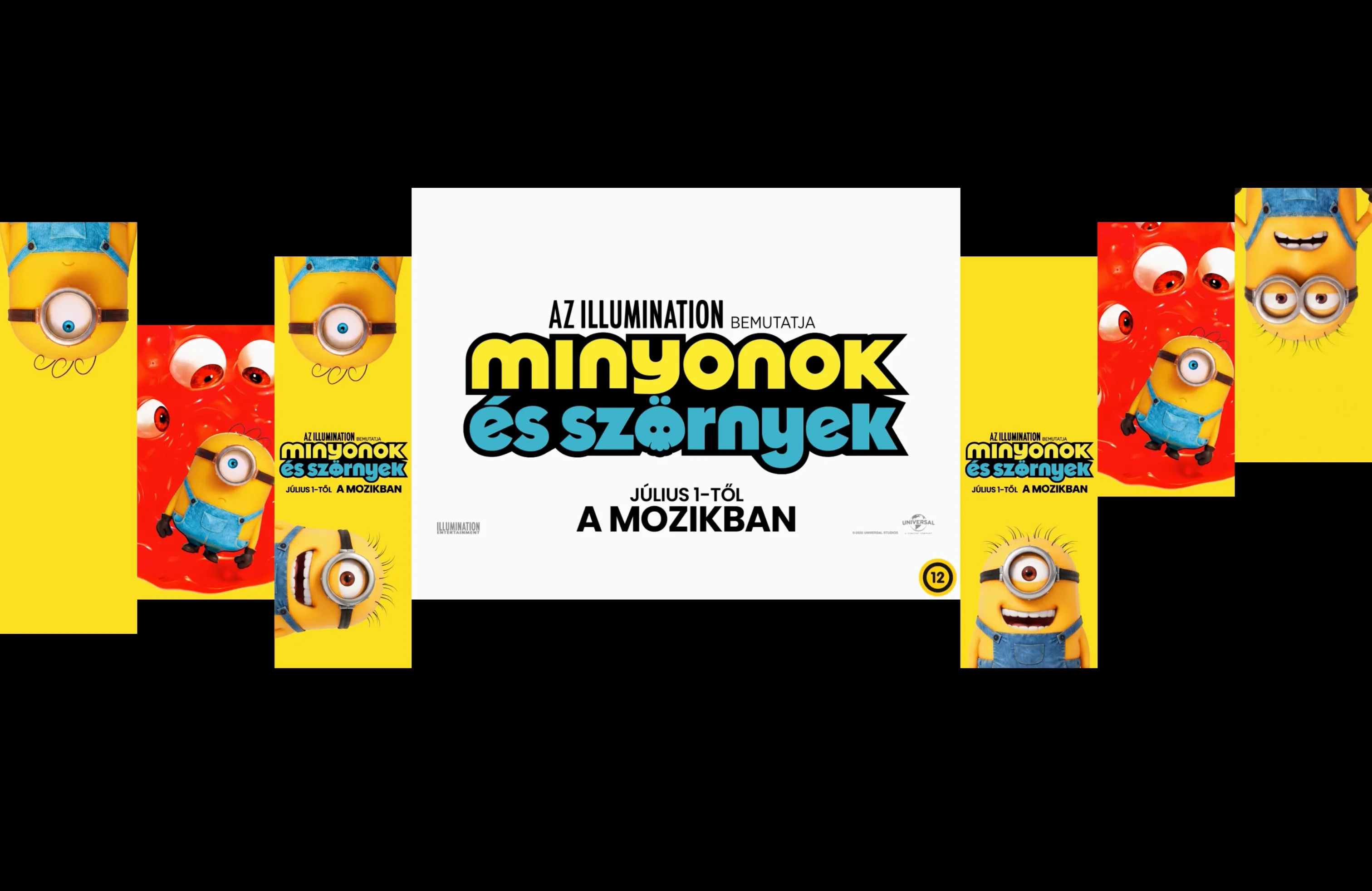
Context
Our partnership with Cinema City began in 2025, when we took over the production of digital signage content for its cinemas. From the start, the project involved multiple markets, locations and non‑standard display formats, ranging from conventional screens to rotundas, pillars, mosaics, staircase displays and panoramic LED installations.
The main challenge was to establish an efficient production process capable of delivering large volumes of content for upcoming film releases, while maintaining high quality, short turnaround times and consistency with the materials supplied by film distributors.
Challenges
We begin each project by creating a master design based on official film campaign assets, including key visuals, posters, trailers, logos and typography. Our role is to translate each film’s visual identity into the cinema environment, adapting it to the specific requirements of different digital signage displays.
Given the variety of screens, adaptation involves much more than simply resizing content. Each format requires adjustments to composition, the placement of key visual elements and animation to ensure content remains clear and effective, regardless of the display. Our understanding of screen specifications allows us to combine creative design with the technical requirements of content playback.
We developed a scalable production process built around a single master for each film title. Once approved, we prepare versions tailored to individual markets, taking into account language, release dates, age ratings and cinema formats such as IMAX and 4DX. Each localised version goes through an approval process before the final adaptations are produced for different displays.
This approach reduces production times, optimises costs and ensures campaign consistency across all locations while preserving the character of the original creative. The process is supported by a library of approximately 100 display formats and technical specifications, enabling efficient content adaptation across different screens.
Solution
During the first year of our partnership, we produced approximately 350 masters, which resulted in around 32,000 final files following localisation and adaptation. The production process currently covers 7 markets, 44 locations, approximately 183 screens and around 100 different content formats and specifications.
On average, we produce approximately 30 new masters each month, with production evolving alongside the film release calendar. Our standardised workflow allows us to manage multiple titles, language versions and non‑standard displays simultaneously, without having to rebuild the production process for each new campaign.
The model is designed for further scalability, allowing new cinemas, markets and display formats to be incorporated into the existing process while maintaining campaign consistency and production quality.